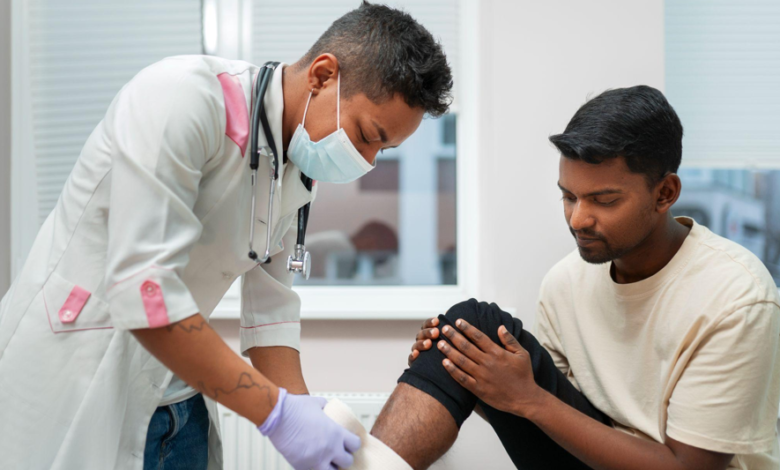
Sports injuries are common among people, and these occur while performing different physical activities. Choosing the right pain management technique is important so that an injury does not become a critical one in the future.
Around 35% of the injuries among Canadians occur while participating in any sport. Sports injuries refer to the type of injuries that take place when you are involved in a sport or any athletic activity. Some of the common sports injuries are bursitis, bone fractures, tendinitis, etc.
Pain management is a challenge in sports injuries because pain is not only physical but also mental. For example, sports personalities and athletes deal with fear, anxiety, and stress while suffering from sports injuries. In this article, we will list the different pain management techniques for sports injuries.
Sports Injury Pain: What to Know?
Sports injuries are related to both acute and chronic pain. How do they differ? Well, acute pain hits from trauma (fractures, sprains, etc.) and offers immediate pain, whereas chronic pain builds slowly from overuse (tendinitis, shin splints, etc.).
If you keep an acute pain untreated, it can turn into a chronic one. Here are different pain types and causes.
| Pain type | Common Cause | Examples |
| Acute pain | Sudden injury | Sprains, fractures, etc. |
| Inflammatory pain | Tissue irritation | Bursitis, tendinitis, etc. |
| Mechanical pain | Movement-related | Meniscus tears |
Table 1: Pain types and causes
What are the Different Ways to Manage Sports Injuries?
Here are the top six pain management techniques that you can consider while dealing with sports injuries.
1. Over-the-Counter (OTC) Medications
Not a long-lasting treatment option, but you can rely on OTC medications if you have mild to moderate pain. Athletes can rely on this pain management technique to manage discomfort and improve mobility. Let’s talk about the common OTC medications.
| Medication type | Benefits | Key consideration |
| NSAIDs (Ibuprofen, Aspirin, etc.) | Lowering pain and swelling and treating inflammation | Kidney and stomach risks |
| Acetaminophen (Paracetamol) | Works in fever and pain reduction | Liver dosage limits |
| Topical analgesics (Capsaicin, Menthol, etc.) | Relief from muscle soreness and aches | Temporary relief |
Table 2: Common OTC Medications
The medicines have side effects. Therefore, you should not continue them if the pain persists.
2. R.I.C.E. Method
To manage pain related to sports injuries, people often rely on non-invasive techniques. Here, the R.I.C.E. (Rest, Ice, Compression, and Elevation) method is a key consideration. Let’s understand the four components.
- Rest: After getting injured, you need to stop performing the concerned activity. Protect the injured area immediately to allow the commencement of the healing process.
- Ice: Apply ice (wrapped in a cloth) or a cold pack for 15 to 20 minutes to numb pain. Cold results in constricting your blood vessels and which lowers swelling.
- Compression: Apply gentle pressure to the injured area and wrap a cloth. This limits fluid build-up, and severe swelling is controlled.
- Elevation: Referring to this component, you need to rest your injured part at an elevated level. If possible, rest it above the level of your heart. This results in lowering blood pressure while restricting bleeding at the injury site.
3. Heat Therapy
Heat therapy (thermotherapy) is an effective treatment option for managing pain related to sports injuries. As per this technique, warmth is applied to the injured area to increase blood flow and improve circulation. This improves flexibility and lowers muscle spasms.
The two main types of heat therapy are dry heat (used for chronic pain) and moist heat (used for acute pain). By lowering pain signal transmission, this technique changes the way pain is perceived by the Brain. This is not recommended if the injured area is swollen or bruised. People having pre-existing conditions like diabetes or dermatitis must not seek this treatment.
4. Ketamine Therapy
When other treatments fail to offer the desired outcome, ketamine infusions for pain management can be an ideal option to manage pain related to sports injuries. Guided by anesthesiologists, this technique lowers pain by blocking N-methyl-D-aspartate (NMDA) receptors in the brain and spinal cord.
Ketamine therapy for pain relief resets pain pathways, thereby lowering pain signal transmission. This treatment technique helps to treat acute pain and neuropathic pain. You can acknowledge pain management with ketamine treatments to prevent acute pain from becoming chronic. This treatment is not recommended to people having an active psychosis, liver impairment, or uncontrolled vascular conditions (heart failure, stroke, etc.).
See also: How Durable Is the HONOR Magic V5?
5. PRP Therapy
The platelet-rich plasma (PRP) therapy is effective in supporting wound healing in trauma and joint injury, thereby making it a choice for sports injuries. In this respect, platelet-rich plasma is created from your blood sample and is injected into the target area. The clinician might consider an ultrasound for guiding the injection.
Pain management in sports injuries requires good support for the healing procedure. Here, PRP therapy is a good option as it has a vital role to play in body repair. Being a natural approach to pain relief, this technique minimises inflammation. People with blood disorders (anemia, thrombocytopenia, etc.), active infection, or chronic illness must not choose this therapy.
6. Epidural Injections
Dealing with sports injuries is not a concern if you opt for epidural injections for pain relief. But why? Well, epidural pain management injections are anti-inflammatory steroids and anesthetics that lower inflammation and block pain signals. The medicine is injected into the area around your spinal cord (epidural space).
Epidural injections are of several types, like transforaminal, interlaminar, and caudal. The best thing about this technique is that it can diagnose the source of pain if it subsides. Epidural injections for pain alleviation are not suggested for people with active infections, bleeding disorders, or allergies.
Moving from OTC to Injections: Probable Scenarios
Here are some of the scenarios when you need to move from OTC medications to injections.
- Pain lasting for around 4 to 6 weeks
- Limited mobility
- Failure of conservative treatments
Wrapping Up
Pain management is difficult in sports injuries because your pain can be acute or chronic. Therefore, choosing the right treatment technique is important. The ketamine infusions for pain management reduce pain by blocking N-methyl-D-aspartate (NMDA) receptors. People also consider epidural injections for pain relief to lower inflammation and alleviate pain.
Planning to Treat a Sports Injury?
Choose a renowned pain management clinic in Canada that offers a range of pain management treatments. Consult with a specialist and find out the treatment that suits your condition. Treat your pain before it exceeds the curable level.