Introduction: Why “Best” Means Something Very Different in B2B Lighting Projects
In the consumer world, “best” is a subjective superlative often driven by aesthetic appeal or the immediate gratification of a low price point. However, in the high-stakes arena of B2B procurement—encompassing municipal infrastructure, commercial real estate, and industrial complexes—”best” is a cold, calculated metric of risk mitigation.
For a procurement manager or lead engineer, an outdoor lighting fixture is not just a light source; it is a critical asset integrated into a broader operational ecosystem. When a light fails in a high-traffic coastal boardwalk or a 50-story architectural façade, the “savings” found in a cheaper unit price evaporate instantly. In professional contexts, “best” is defined by the predictability of performance over time and the minimization of Total Cost of Ownership (TCO).
Purchase Price Is Only a Small Part of the Real Cost: The 30/70 Rule
A fundamental axiom in professional procurement is that the “sticker price” of an outdoor LED is merely the tip of the iceberg. Industry data suggests that for complex outdoor installations, the initial hardware acquisition often accounts for less than 30% of the total lifecycle cost.
The “Hidden” 70% includes:
- Logistical Complexity: Specialized shipping, storage, and on-site handling.
- High-Exposure Installation: The cost of hiring certified electricians and specialized equipment (e.g., bucket trucks, scaffolding, or industrial climbers).
- Operational Continuity: The cost of “downward” impact—for example, a hotel losing revenue because its outdoor terrace lighting is under repair.
- Energy Efficiency Ratios: A 10% difference in efficacy ($lm/W$) across 500 fixtures over five years can represent tens of thousands of dollars in utility variance.
Why Outdoor Failures Are Especially Expensive: The “Access Penalty”
In B2B environments, the cost of a failure is rarely the cost of the replacement part; it is the cost of access. Consider a failed LED strip on a bridge pylon. To replace a $200 component, the facility manager may need to:
- Apply for a municipal lane-closure permit ($500–$2,000).
- Rent a high-reach lift ($1,500/day).
- Deploy a three-person crew during off-peak hours (overtime labor rates).
When the labor and logistics of a repair cost 10x the value of the product, the procurement strategy must shift from “cost-effective” to “failure-intolerant.” This is why seasoned buyers look for Mean Time Between Failures (MTBF) data rather than just warranty stickers.
IP Rating as a Procurement Risk Variable
The Ingress Protection (IP) rating is often misunderstood by non-professionals as a “higher is better” ranking. In professional procurement, it is a precision tool for cost-optimization.
The Risks of Misalignment:
- Under-specification (IP65 where IP67 is needed): Leads to capillary action where moisture is “sucked” into the fixture during cooling cycles, causing catastrophic PCB corrosion.
- Over-specification (IP68 where IP65 is needed): Often leads to “over-sealing.” A fixture that is hermetically sealed to survive submersion may lack the ability to “breathe,” leading to internal pressure build-up and premature seal failure due to thermal expansion.
Environmental Classification: The Pre-Procurement Audit
Before a single SKU is reviewed, professionals conduct an environmental audit. The “best” light for a covered parking garage (protected from direct rain but exposed to humidity and exhaust) is fundamentally different from a light for a salt-spray coastal pier.
Key Classification Factors:
- Chemical Exposure: Will the lights be cleaned with harsh detergents? (Requires specific lens materials like PMMA over PC).
- UV Index: High-UV environments degrade silicone seals and yellow cheap plastic diffusers, shifting the color temperature ($CCT$) over time.
- Ambient Temperature Extremes: In desert or tropical climates, the delta between internal heat and external air is the primary killer of LED drivers.
Lifecycle Cost (LCC) vs. Initial Cost: The ROI of Quality
Professional buyers utilize LCC Analysis to justify higher Capex (Capital Expenditure) to stakeholders.
Equation of Value: $LCC = Price + Installation + (Maintenance \times Frequency) + Energy + Disposal$
By investing 20% more upfront in a fixture with a superior thermal management system, a firm might reduce its maintenance frequency from “every 3 years” to “every 8 years.” In a B2B context, that single avoided maintenance cycle represents a 200–400% ROI on the initial price difference.
See also: IT Support Services to Keep Your Technology Running Smoothly
The Paradox of Over-Specification: Thermal Suffocation
One of the most nuanced points in professional lighting is that maximum waterproofing can be the enemy of longevity. LEDs generate heat. In an IP68-rated (fully submerged) light, the surrounding water often acts as a heat sink. If that same light is installed in open air, the thick potting compounds and heavy seals meant to keep water out act as insulation, trapping heat around the LED chips. This accelerates lumen depreciation, where the light loses its brightness long before the electronics actually fail.
Heat Management as a Procurement Criterion
The “best” outdoor LED is essentially a high-performance heat sink that happens to emit light. Professionals look for:
- Passive Cooling Fins: Cast aluminum housings with sufficient surface area.
- Thermal Conductivity of Potting: If the light is potted (filled with resin), is the resin thermally conductive?
- TC Point Monitoring: Does the manufacturer provide the temperature at the $Tc$ (case) point under maximum load?
Waterproofing Methods: Potting vs. Structural Sealing
Procurement teams must choose between two primary waterproofing philosophies:
- Potting (Encapsulation): Filling the entire fixture with silicone or epoxy. This is excellent for vibration resistance and total water exclusion but makes the fixture non-repairable.
- Structural Sealing (Gaskets): Using precision-engineered O-rings and gaskets. This allows for modularity and part replacement but requires higher-quality assembly to ensure long-term integrity.
The choice depends on the Maintenance Strategy (Section 9). If the plan is to “replace upon failure,” potting is superior. If the plan is “preventative maintenance,” gasketed modular systems are preferred.
Maintenance Strategy as a Cost-Control Tool
In the B2B world, “unserviceable” equals “disposable.” For large-scale projects, professionals prefer modular architectures.
- Plug-and-Play Connectors: Waterproof (IP67) quick-connectors allow a faulty module to be swapped in minutes without a soldering iron.
- External Drivers: Placing the LED driver (the component most likely to fail) in a more accessible, cooler location than the light engine itself.
Warranty Terms vs. Real-World Risk
A 10-year warranty is useless if the manufacturer goes bankrupt in year three, or if the “fine print” excludes failures caused by “environmental factors.” Professional buyers prioritize bankability—the likelihood that the manufacturer will exist and honor the claim. They also look for “labor-inclusive” warranties, though these are rare and usually command a premium.
Case Pattern: The “Five-Year Cliff”
Many mid-tier outdoor LEDs perform perfectly during the first 24 months. However, around year four, the “cliff” appears. This is usually due to Material Fatigue:
- The coefficient of thermal expansion causes different materials (glass vs. metal) to pull apart, microscopic cracks form in the seals, and moisture enters via vapor diffusion.
- The “best” lights are those tested via Highly Accelerated Life Testing (HALT) to simulate these five-year stresses in a matter of weeks.
Conclusion: The Professional Definition of “Best”
For the B2B professional, the best outdoor waterproof LED lights are not those with the highest lumen output or the lowest price. They are the lights that offer the tightest alignment between the IP rating and the specific environmental risks of the site.
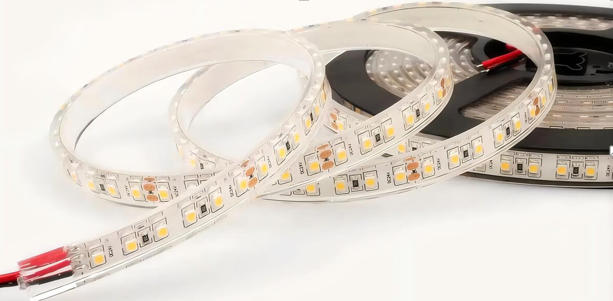
A clear, application-focused explanation of how IP levels relate to outdoor LED strip lighting performance can be found in this reference on best outdoor waterproof LED lights, which many buyers use to align specification with real-world risk.
“Best” is a product that balances:
- Waterproofing that doesn’t sacrifice Thermal Management.
- Initial Cost that doesn’t ignore Access Penalties.
- Technical Specs that are backed by Bankable Warranties.
In the end, professional procurement is about buying certainty. By understanding the relationship between IP ratings, lifecycle costs, and environmental reality, buyers can transform lighting from a recurring maintenance headache into a stable, long-term asset.